
Srinagar old city. A place with lots of old fashion charm, the massive presence of the Indian army and goodhearted but bitter-sweet locals who take every opportunity to tell us confused foreigners that: "We want freedom, that's what we want!"
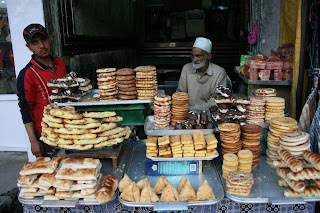
The local people are masters of their ovens. They make delicious bagel-like tandoori bread with sesame seed and all kinds of biscuits and cakes.
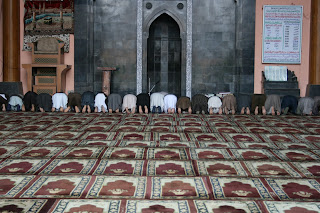
There are beautiful old mosques in Srinagar city. This is one of them. ....Muslim fitness with devotion.
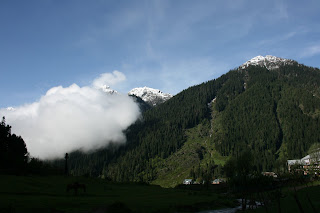
The weather changes by the minute around here. Now the big clouds are creeping up on us.

This is a small mountain-village of Aru and the local bus that comes ones a day and goes back the next day. But for the winter these villages get cut off from the rest of the world by the snow for months at a time.
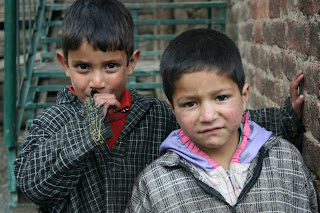
Some local mountain boys. These people speak Urdu and a local language called Kashmiri that is a mix of Hindi, Urdu and Arabic.
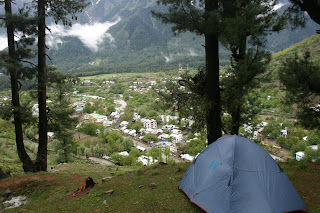
The country side of Kashmir is out of a fable-book. Mainly high pastures and snow-capped mountains. There are plenty of madly running rivers fed by melting glaciers to keep the foliage as green as it can get.

Two good local merchants...

"If your mosque wants to play the loudest muezzin call, be our client."

Kashmir is the land of splendid garments made of local silk, pashmina, wool and other delicate fabrics.
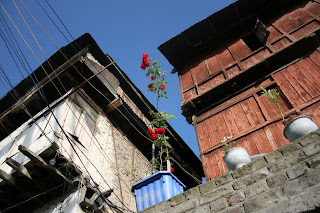
The local architecture is large houses mainly made of wood and bare red-brick.
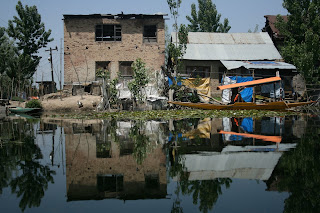
Welcome to Kashmir, according to the Indian government; the northest state of India, according to the local Muslim communities; autonomous territory, forcefully occupied by the Indian Army since 1948.
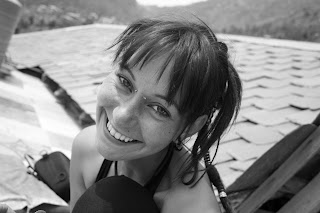
Smiling Tosca Pontillo
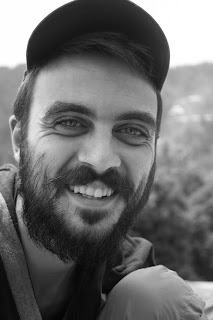
Smiling Gabrielle Stassi
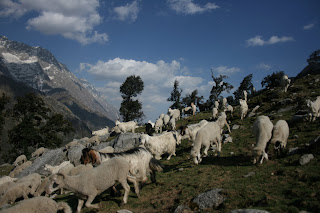
Lots of sheep and goats. The tender hair growing from the cheek and the bottom-neck part of the local goats is called Pashmina. Apparently the finest quality of wool on the market. Depending on what is the pashmina percentage in let's say a Kashmir shawl, it's value goes up tremendously.
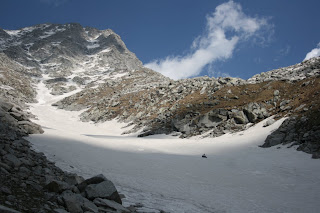
But at least we did it with style. This is how it looks when you sit on your rucksack and slide down a mighty glacier (well.. practically mainly on your ice-soaked butt)

Sometimes the Himalaya can be real deceiving. Peaks that look real close, can be pretty damn' fare. After about 3800m being short on time and equipment, we had to turn back.

We took a three day hike, setting out to conquer the first range of the Himalayas. The peak I am looking at on the second morning was the final target at 4200m.
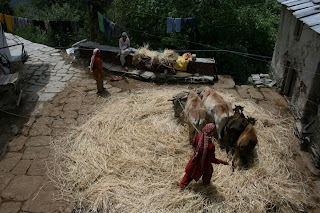
This is from our balcony. Step-aunty is creating some crop-circles in the yard.
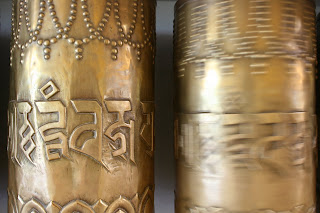
Buddhist temple interior.
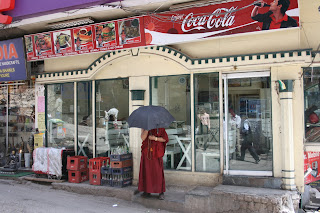
Well not only His Excellency, but the whole Tibetan government in exile is harbored here in a village called Meclaudeganj.
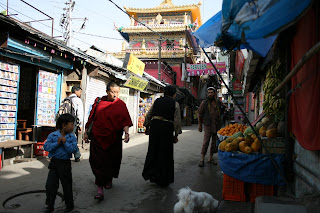
So after Sikh-land Punjab, we found ourselves back up at the foothills of the majestic Hymalaya. The town is called Daramsala, one of the local unique features is the Dalai Lama as a permanent resident since the 50's.
 Srinagar old city. A place with lots of old fashion charm, the massive presence of the Indian army and goodhearted but bitter-sweet locals who take every opportunity to tell us confused foreigners that: "We want freedom, that's what we want!"
 The local people are masters of their ovens. They make delicious bagel-like tandoori bread with sesame seed and all kinds of biscuits and cakes.
 There are beautiful old mosques in Srinagar city. This is one of them. ....Muslim fitness with devotion.
 The weather changes by the minute around here. Now the big clouds are creeping up on us.
 This is a small mountain-village of Aru and the local bus that comes ones a day and goes back the next day. But for the winter these villages get cut off from the rest of the world by the snow for months at a time.
 Some local mountain boys. These people speak Urdu and a local language called Kashmiri that is a mix of Hindi, Urdu and Arabic.
 The country side of Kashmir is out of a fable-book. Mainly high pastures and snow-capped mountains. There are plenty of madly running rivers fed by melting glaciers to keep the foliage as green as it can get.
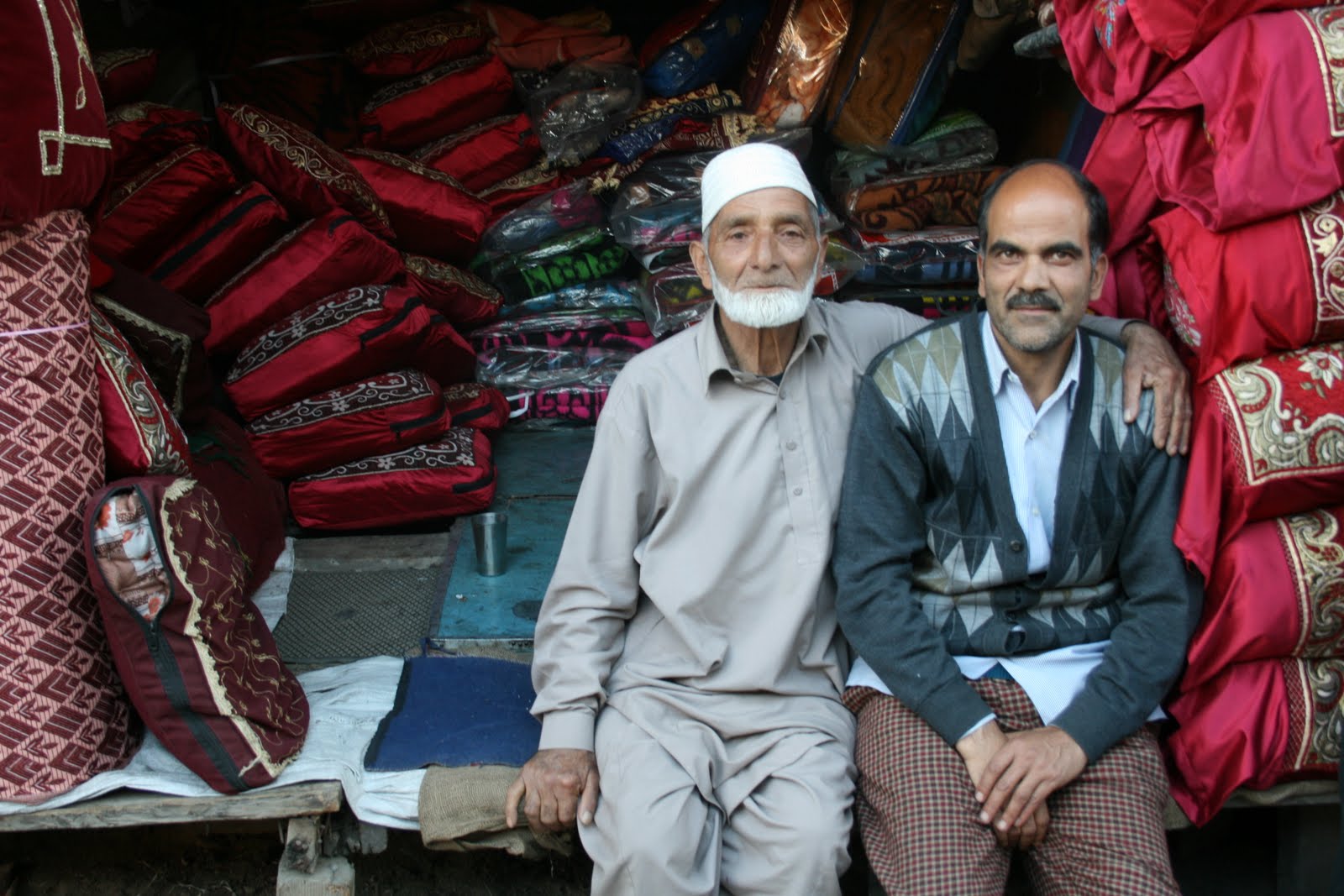 Two good local merchants...
 "If your mosque wants to play the loudest muezzin call, be our client."
 Kashmir is the land of splendid garments made of local silk, pashmina, wool and other delicate fabrics.
 The local architecture is large houses mainly made of wood and bare red-brick.
 Welcome to Kashmir, according to the Indian government; the northest state of India, according to the local Muslim communities; autonomous territory, forcefully occupied by the Indian Army since 1948.
 Smiling Tosca Pontillo
 Smiling Gabrielle Stassi
 Lots of sheep and goats. The tender hair growing from the cheek and the bottom-neck part of the local goats is called Pashmina. Apparently the finest quality of wool on the market. Depending on what is the pashmina percentage in let's say a Kashmir shawl, it's value goes up tremendously.
 But at least we did it with style. This is how it looks when you sit on your rucksack and slide down a mighty glacier (well.. practically mainly on your ice-soaked butt)
 Sometimes the Himalaya can be real deceiving. Peaks that look real close, can be pretty damn' fare. After about 3800m being short on time and equipment, we had to turn back.
 We took a three day hike, setting out to conquer the first range of the Himalayas. The peak I am looking at on the second morning was the final target at 4200m.
 This is from our balcony. Step-aunty is creating some crop-circles in the yard.
 Buddhist temple interior.
 Well not only His Excellency, but the whole Tibetan government in exile is harbored here in a village called Meclaudeganj.
 So after Sikh-land Punjab, we found ourselves back up at the foothills of the majestic Hymalaya. The town is called Daramsala, one of the local unique features is the Dalai Lama as a permanent resident since the 50's.


